Beginner's Guide to Indoor Foliage Plant Care
A practical guide to five popular houseplants—pothos, monstera, fiddle-leaf fig, snake plant, and peace lily—covering key traits, ideal conditions, care tips, and troubleshooting so you can care for them with confidence.
Introduction
Indoor foliage plants have become a staple of modern living: they add style and help purify the air. Whether in a minimalist flat or a cosy home, a well-cared-for foliage plant brings life to any room. Many beginners run into problems—yellow leaves, slow growth, or plant loss—simply because they lack a clear care routine.
Successful care boils down to four factors: light, water, air flow, and nutrition. These interact and together determine how your plant grows. Needs vary by species, so learning each plant’s habits is the first step. Plant ID tools make it easy to confirm what you have and then look up tailored care advice.
This guide covers five common indoor foliage plants—pothos, monstera, fiddle-leaf fig, snake plant, and peace lily—with their key features, ideal conditions, care routines, and how to fix common issues.
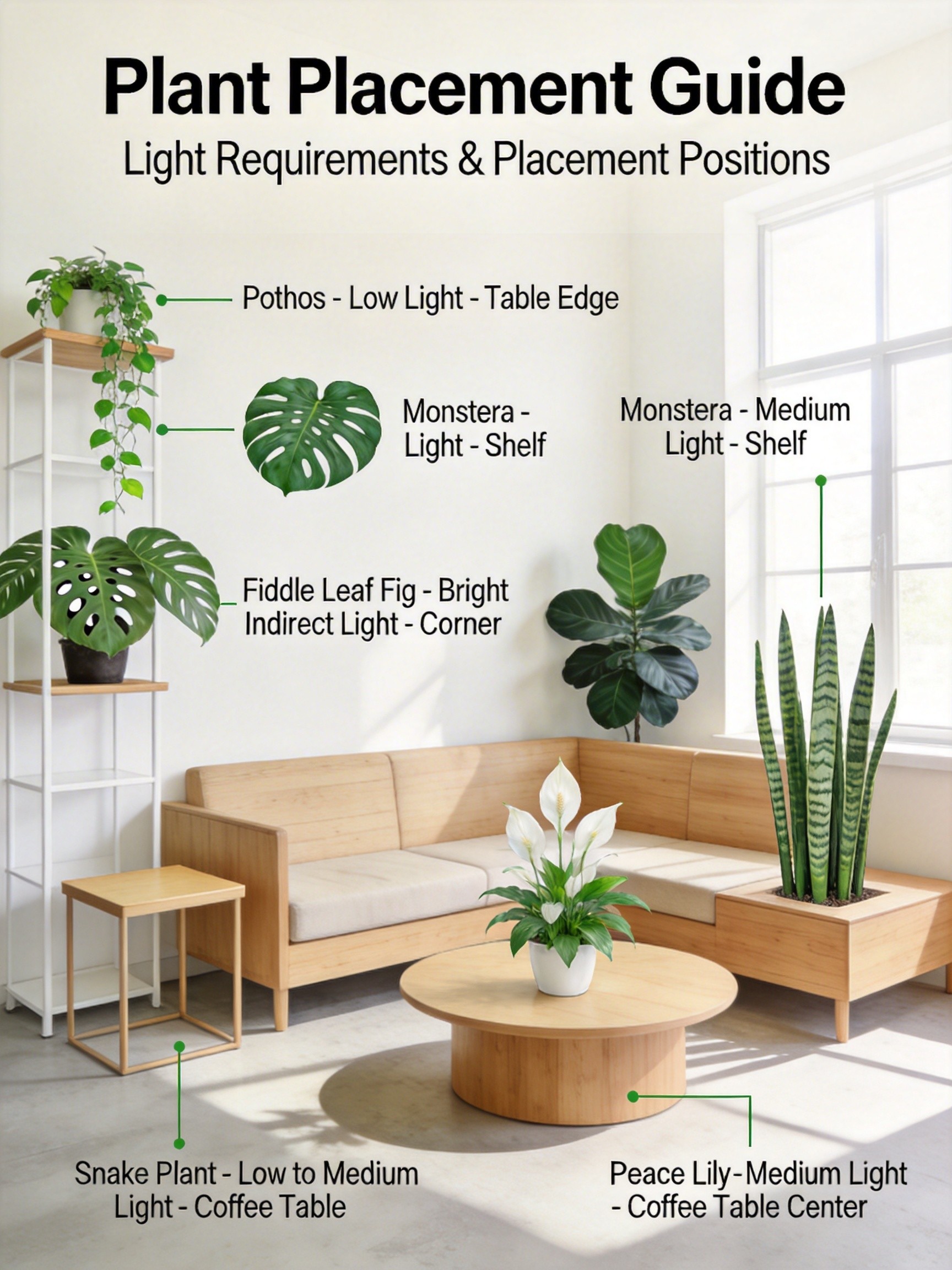
Pothos: The Versatile Starter Plant
Appearance and Ideal Conditions
Pothos (Epipremnum) is an evergreen vine in the arum family. Leaves are heart-shaped and bright green; some cultivars have irregular cream or yellow variegation. It climbs well on supports or can be grown in a hanging basket.
Native to tropical rainforests, pothos likes warmth and humidity. Ideal temperatures are 15–25°C; avoid going below 10°C in winter. It adapts to a range of light levels, from bright living rooms to dimmer bedrooms, which makes it a very versatile houseplant.
Light and Watering
Pothos does best in bright, indirect light and can tolerate partial shade, but long periods in deep shade lead to smaller, paler leaves and loss of variegation. Direct sun can scorch the foliage. Place it 1–2 m from a window for good light without harsh sun.
Watering is critical. Keep the mix moist but not waterlogged: in summer, water every 2–3 days; in winter, about once a week. Check by inserting a finger 2–3 cm into the soil—water when it feels dry. Water until it runs from the drainage holes, and never let the pot sit in water.
Pothos appreciates higher humidity, especially in dry winters or air-conditioned rooms. Mist the leaves, use a humidifier, or set the pot on a tray of damp pebbles to keep foliage healthy and glossy.
Ventilation and Repotting
Good air flow supports healthy growth and helps prevent pests and disease. Ventilate for 2–3 hours daily, and ensure the room is aired after watering so excess moisture can evaporate and roots stay healthy.
Pothos grows quickly and usually needs repotting every one to two years. Spring is the best time. Use a pot 2–3 cm larger and a well-draining, peat- or compost-based mix. If the root ball is dense, trim some old or crowded roots to encourage new growth.
Common Issues and Fixes
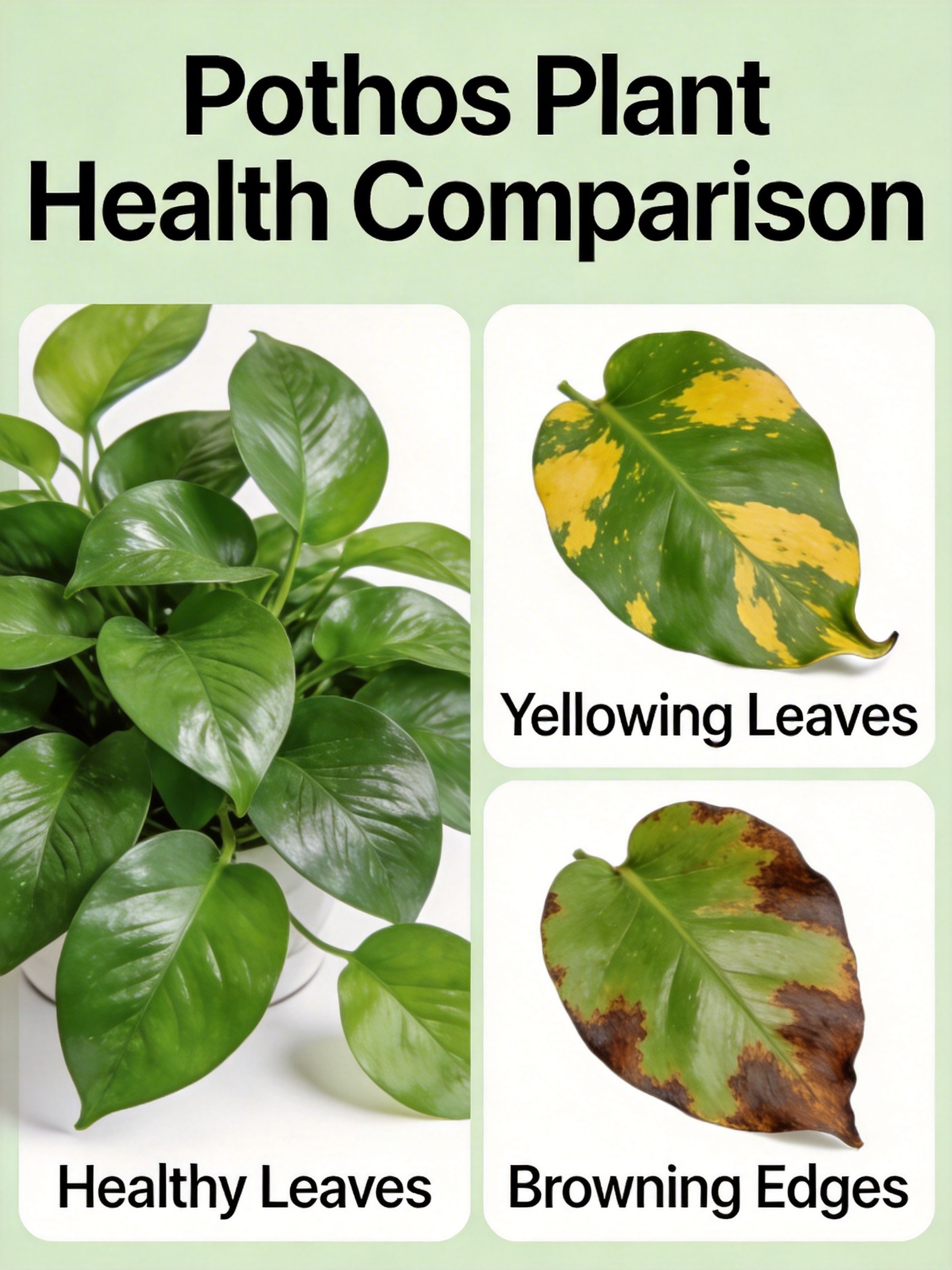
Yellow leaves are common. Lower, older leaves yellowing is normal—trim them. New growth turning yellow often means overwatering and poor oxygen at the roots: reduce watering and improve drainage. Overall yellowing and slow growth usually point to low light—move the plant to a brighter spot.
Root rot comes from overwatering or poor drainage. Signs include wilted leaves and a bad smell from the soil; roots turn dark and mushy. Stop watering, remove the plant, cut away rotten roots, treat with a fungicide, and repot in fresh, well-draining mix.
Brown, crispy leaf edges are usually from dry air or too much sun. Raise humidity, avoid direct sun, and trim damaged leaves so new growth can take over.
Monstera: Elegant Statement Foliage
Appearance and Ideal Conditions
Monstera is a tropical vine in the arum family, known for its deeply lobed, perforated leaves that can reach 30–60 cm across. Mature plants can grow several metres in the wild; indoors, 1–2 m is typical. It also produces prominent aerial roots that absorb moisture and nutrients.
Native to Mexican rainforests, monstera likes warmth, humidity, and bright indirect light. Ideal range is 20–30°C; keep above 15°C in winter. It needs moderate light—no strong direct sun, but avoid deep shade.
Light and Watering
Give it bright, indirect light with some shade. Shield it from strong midday sun in summer; in winter you can allow more light. A spot about 1 m from a north- or east-facing window works well.
Water when the top of the soil feels dry, then water thoroughly ("dry then wet"). In spring and summer, once or twice a week; in autumn and winter, every 10–15 days. Empty the saucer after watering to avoid root rot.
Monstera prefers 60–80% relative humidity. Mist, use a humidifier, or place a water tray nearby. Avoid leaving water sitting in the leaf axils, as this can cause rot.
Ventilation and Repotting
Good ventilation helps prevent pests and disease. Open windows regularly but avoid cold draughts. In air-conditioned rooms, a small fan can improve air movement.
Repot every 2–3 years, ideally in spring, into a well-draining, organic-rich mix. Trim old roots if needed. For very large plants, refreshing only the top layer of soil can reduce stress.
Common Issues and Fixes
Young monsteras have solid leaves; splits and holes develop as the plant matures. If a mature plant still has no splits, it may need more light or fertiliser.
Yellow leaves can have several causes: normal ageing on lower leaves; overwatering or low light on new growth; or iron deficiency (overall yellowing)—use an iron-containing fertiliser. Identify the cause before acting.
Long aerial roots are normal. You can guide them into the pot or wrap them in moist sphagnum to keep the plant tidy and help it take up water and nutrients.
Fiddle-Leaf Fig: A Focal Point for Modern Interiors
Appearance and Ideal Conditions
The fiddle-leaf fig (Ficus lyrata) is an evergreen tree in the fig family, with large, violin-shaped leaves 20–30 cm long, deep green and glossy. In the wild it can exceed 10 m; indoors, 1.5–2.5 m is typical. It has a strong root system and needs good soil.
Native to West African rainforests, it likes warm, humid conditions and plenty of bright indirect light. Ideal temperatures are 18–28°C; keep above 10°C in winter. It needs more light than many houseplants to stay in good shape.
Light and Watering
Water on a "wet then dry" cycle: keep the soil slightly moist in spring and summer (about once or twice a week) and allow it to dry more in autumn and winter. Water evenly and avoid leaving the root ball half dry.
It needs strong indirect light and can tolerate some direct sun. Avoid harsh midday sun in summer; in winter, maximise light. A position 0.5–1 m from a south- or west-facing window is ideal.
Aim for 50–70% relative humidity. Mist or use a humidifier in dry periods, but avoid leaving large droplets on the leaves.
Ventilation and Repotting
Good air flow reduces pests and disease. Ventilate daily, especially after watering. Poor ventilation encourages spider mites and scale.
Fiddle-leaf fig grows slowly; repot every 2–3 years in spring into a well-draining, fertile mix. Handle roots gently. For large plants, replacing only the top layer of soil can limit stress.
Common Issues and Fixes
Leaf drop is the main issue. Causes include sudden changes in temperature, light, or position; over- or underwatering; and pests. Keep conditions stable, water consistently, and check for pests.
Drooping leaves usually mean the plant is thirsty. Large leaves lose water quickly—water as soon as you see droop, but avoid flooding the pot at once.
Small new leaves often indicate low light or lack of nutrients. Give more light and feed regularly so the plant can produce full-sized leaves.
Snake Plant: Tough, Low-Water Air Purifier
Appearance and Ideal Conditions
Snake plant (Sansevieria) is a succulent, upright perennial with thick, strap-like leaves and horizontal banding that gives it a distinctive look. Height varies by variety, from about 30 cm to 1.2 m. It is both ornamental and effective at filtering pollutants such as formaldehyde.
Native to tropical Africa, it prefers warm, dry conditions and bright light. Ideal range is 18–27°C; keep above 10°C in winter. It tolerates strong light and partial shade and is one of the most forgiving houseplants for beginners.
Light and Watering
It adapts from full sun to partial shade. More light brings out colour and banding; too little makes leaves soft and pale. A bright spot with some direct sun is fine.
Water sparingly: "better dry than wet." In spring and summer, every 2–3 weeks; in autumn and winter, every 4–6 weeks. If leaves start to wrinkle slightly, it is time to water.
It does not need high humidity. Occasional misting in dry weather is optional; avoid soaking the centre of the rosette to prevent rot.
Ventilation and Repotting
Ventilation is less critical than for many houseplants, but fresh air still helps. In closed rooms, avoid overwatering to prevent root rot.
Repot every 2–3 years in spring into a well-draining, sandy mix. Trim damaged or rotten roots. When the pot is full, you can divide the plant into several pots.
Common Issues and Fixes
Root rot is the most common problem, usually from overwatering. Signs: soft base, leaves falling over, bad smell. Stop watering, remove the plant, cut away rotten roots and leaves, treat with fungicide, let it dry, then repot in fresh, well-draining soil.
Soft leaves can mean thirst or root damage. If underwatered, leaves firm up after watering. If roots are damaged, check them and repot if needed.
Dry leaf tips can result from low humidity or uneven watering. Trim the dead tips; improve humidity and watering to prevent it spreading.
Peace Lily: Graceful Foliage and Flowers
Appearance and Ideal Conditions
Peace lily (Spathiphyllum) is a perennial in the arum family. Leaves are oblong to lance-shaped, 20–30 cm long and 8–12 cm wide, deep green and glossy. The white spathe and cream or white spadix are its main attraction; with good care it can bloom for much of the year.
Native to the American tropics, it likes warmth, humidity, and bright indirect light. Ideal range is 18–28°C; keep above 14°C in winter. It needs enough light to flower but must be protected from direct sun. Low humidity leads to brown leaf tips.
Light and Watering
Bright, indirect light or light shade is ideal. Avoid strong direct sun in summer; in winter you can give a bit more light. About 1 m from an east- or north-facing window is a good position.
Keep the soil moist but not waterlogged. In spring and summer, water once or twice a week; reduce in autumn and winter. Peace lilies are sensitive to both drought and overwatering—adjust according to conditions.
Aim for 60–80% relative humidity. In dry periods, mist or use a humidifier. The leaves are sensitive to tap water; let it stand for 1–2 days to allow chlorine to dissipate.
Ventilation and Repotting
Good ventilation helps prevent pests and disease. Ventilate regularly but avoid cold draughts. In air-conditioned rooms, use a small fan and monitor humidity.
Repot every 1–2 years in spring into a well-draining, organic-rich mix. Trim old roots gently. The root system is sensitive, so handle with care when repotting.
Common Issues and Fixes
No flowers are often due to low light, lack of fertiliser, or a plant that is still too small. Increase light, feed with a phosphorus-potassium fertiliser, and give the plant time to mature.
Yellow leaves: lower leaves yellow with age; new growth may yellow from overwatering or low light; overall yellowing with green veins can mean iron deficiency—use an iron fertiliser. Always identify the cause first.
White spathes turning green is normal as flowers age. To extend the display, slightly lower the temperature to slow the ageing process.
Summary
Indoor foliage care is manageable once you understand the basics and each plant’s needs. Light, water, ventilation, and nutrition are the four pillars—balance them according to the species.
Beginners can start with adaptable plants like pothos and snake plant, then broaden from there. When you are unsure of a plant’s identity, use a plant ID tool first, then look up care guidelines. That way you avoid many common mistakes and build confidence over time.
You may also like
More plant care and identification knowledge